The Art of the 1:1: Coaching for Growth
-
Project Title: Effective One on One Coaching and Actionable Feedback for New Managers
Role: Instructional Designer (End-to-End)
Target Audience: New and Mid-level Managers -
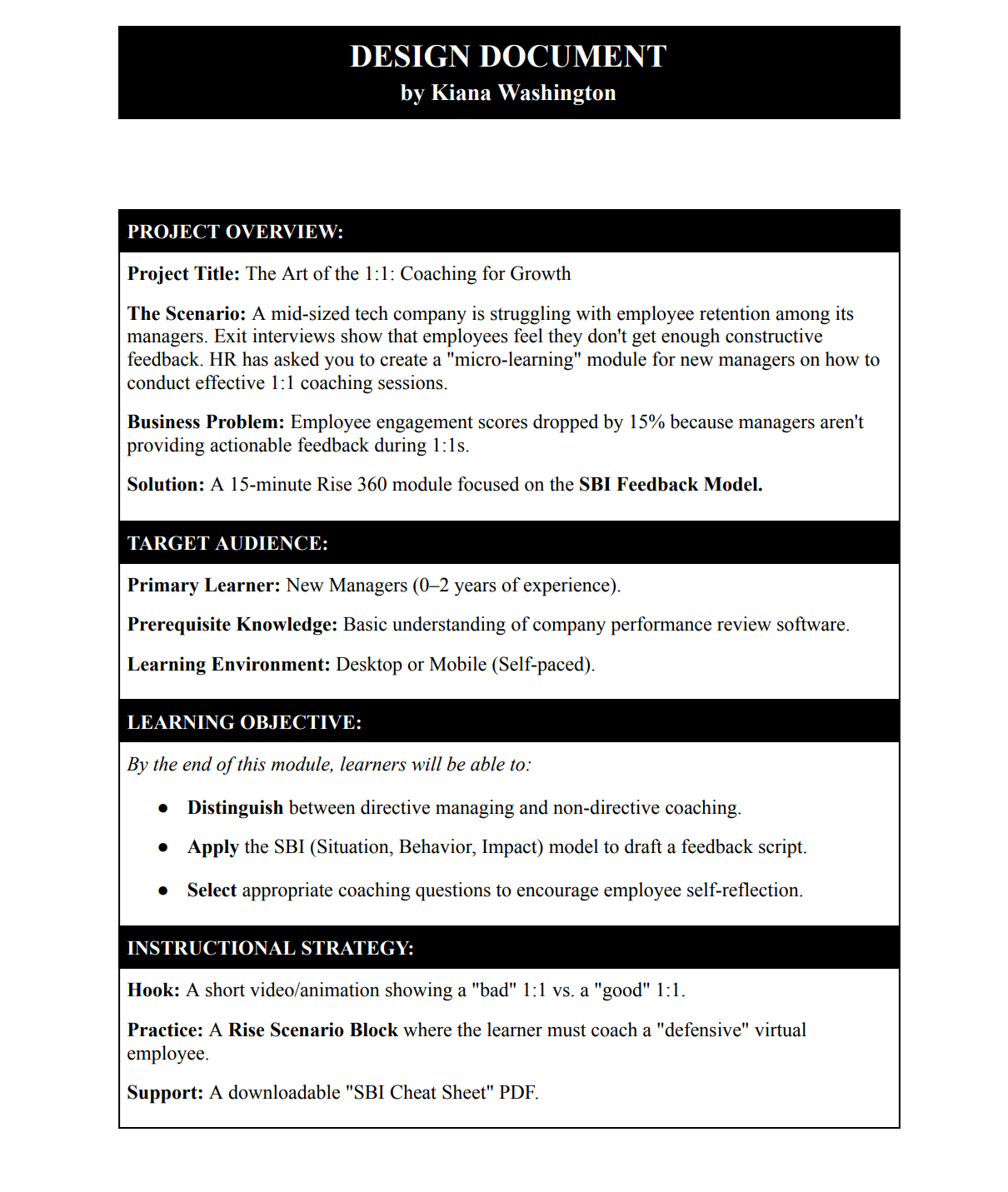
Business Problem: Employee engagement scores dropped by 15% because managers aren't providing actionable feedback during 1:1s.
Solution: A 15-minute Rise 360 module focused on the SBI Feedback Model.
-
ADDIE Model
Analysis: Following an internal audit, employee engagement scores had declined by 15%, signaling a breakdown in manager–employee communication. Further analysis revealed that 1:1 meetings were being underutilized and treated as administrative check-ins rather than opportunities for coaching, development, and meaningful feedback.
The target audience consisted of new and mid-level managers who were technically competent but lacked confidence and structure when delivering feedback. Learners needed practical guidance on how to coach—not just why it matters. The primary performance gap centered on inconsistent feedback quality, avoidance of difficult conversations, and limited application of coaching frameworks in real-world interactions.
Design: The course was intentionally designed to shift managerial mindset from “Project Manager” to “Coach.” Learning objectives focused on helping managers:
Recognize the difference between status-driven 1:1s and coaching-centered conversations
Apply the SBI (Situation, Behavior, Impact) Feedback Model effectively
Deliver feedback that is specific, objective, and growth-oriented
To support these objectives, the course used scenario-based learning and reflective practice rather than lecture-style content. The design emphasized comparison and contrast—allowing learners to analyze ineffective vs. effective 1:1 meetings—and practice transforming vague feedback into actionable coaching language.
The course structure was modular and tool-agnostic to ensure transferability across organizational contexts.
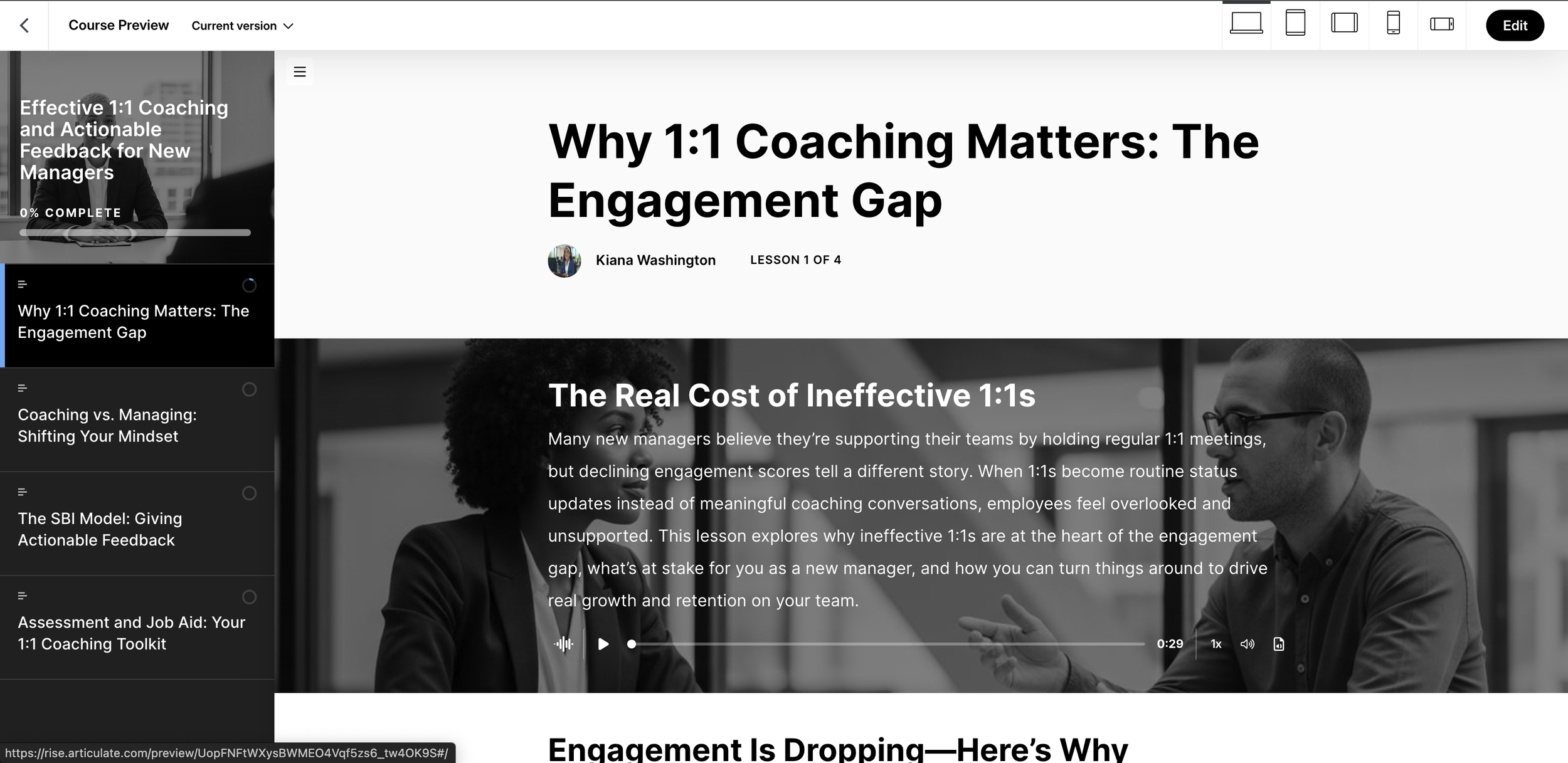
Development: During development, the course was built using Articulate Rise 360 and Storyline to support both content delivery and interactive practice. Canva was used to create clean, manager-friendly visuals and job aids.
Key development strategies included:
Simulated SME Collaboration: Conducted mock SME interviews to surface tacit knowledge, common beginner mistakes, and real-world coaching nuances not typically documented in leadership playbooks.
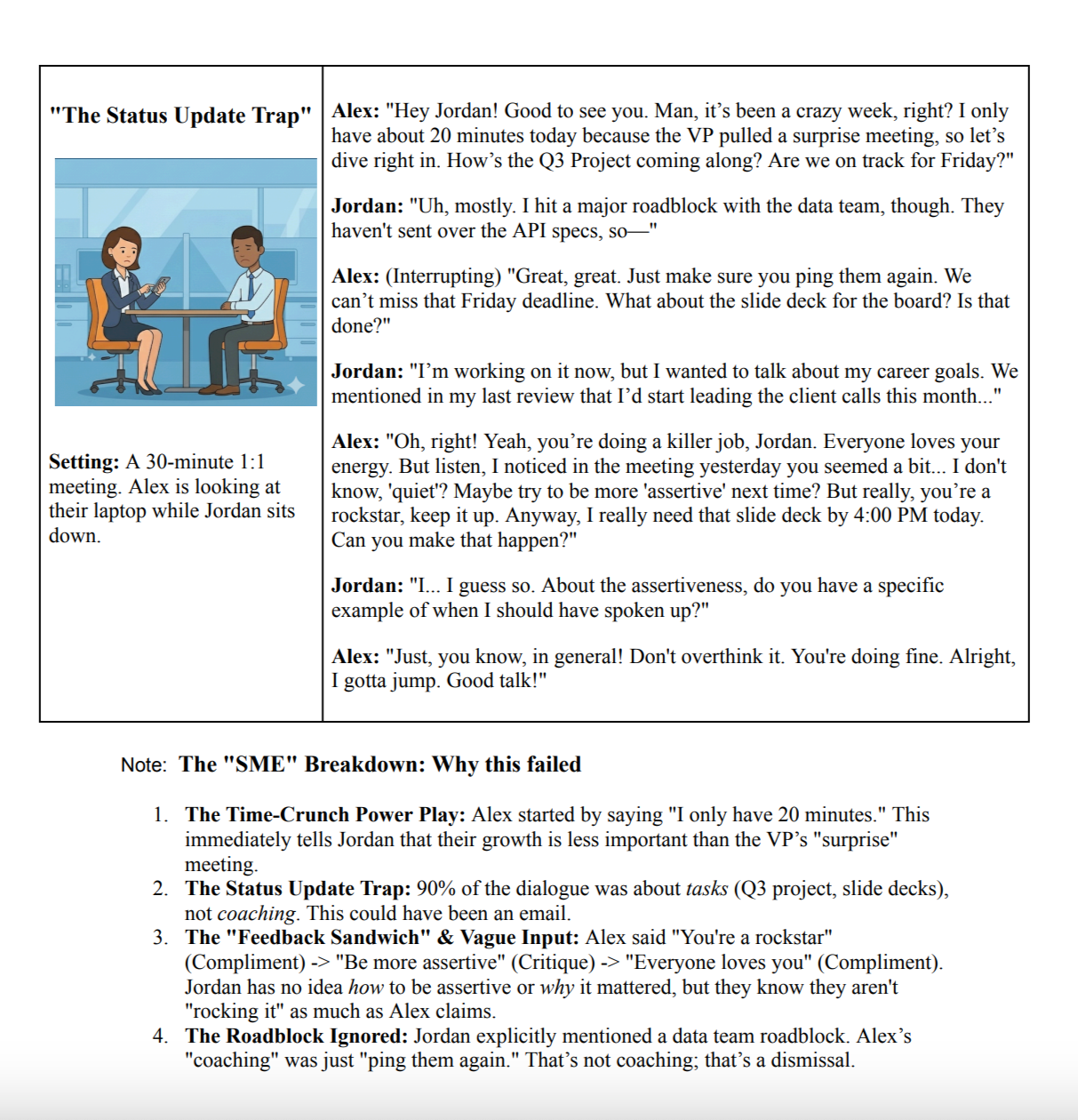
Active Learning Scenarios: Developed “Spot the Mistake” activities where learners critique ineffective 1:1 conversations and identify missed coaching opportunities.
Assessment Design: Created a criteria-based reflective quiz requiring learners to apply the SBI model to realistic feedback scenarios rather than recall definitions.
Performance Support: Designed a downloadable “1:1 Coaching Compass” Job Aid to provide just-in-time guidance during high-stakes conversations.
Implementation: The course was designed for flexible, self-paced delivery and could be easily embedded into a leadership development or manager onboarding program. Interactive elements allow learners to practice coaching conversations in a low-risk environment before applying skills on the job.
The job aid serves as a bridge between learning and performance, reinforcing behavior change during actual 1:1 meetings.
Evaluation: Course effectiveness was measured through learner engagement with interactive scenarios, performance on application-based assessments, and self-reflection prompts tied to real workplace conversations. Feedback and learner response data were intended to inform iterative updates, including expanded scenario libraries and advanced coaching challenges.
The design allows for scalability as organizational coaching expectations evolve.
-
Articulate Rise 360. Canva
Project Title: The Art of the 1:1: Coaching for Growth
Role: Instructional Designer (End-to-End) Tools: Articulate Rise 360, Storyline, and Canva Target Audience: New and Mid-level Managers
📋 The Challenge
Following an internal audit, it was discovered that employee engagement scores had dropped by 15%. Analysis revealed a significant performance gap: managers were using 1:1 meetings for administrative status updates rather than providing actionable coaching and feedback.
💡 The Solution
I designed an interactive learning experience focused on shifting the manager's mindset from "Project Manager" to "Coach." The course centers on the SBI (Situation, Behavior, Impact) Feedback Model to ensure feedback is objective, actionable, and tied to growth.
🛠️ My Process
SME Collaboration: Simulated Subject Matter Expert (SME) interviews to identify "hidden" nuances and common beginner mistakes not found in standard documentation.
Active Learning: Developed "Spot the Mistake" scenarios comparing ineffective "Status Update" meetings with high-impact "Coaching" sessions.
Assessment: Created a criteria-based reflective quiz to test the learner’s ability to apply the SBI model in real-world scenarios.
Performance Support: Designed a downloadable "1:1 Coaching Compass" Job Aid to provide just-in-time support for managers during high-stakes conversations.
🚀 Key Features
Interactive Scenarios: Learners critique "Bad" vs. "Good" scripts to build analytical skills.
SBI Integration: Practice exercises for transforming vague critiques into actionable feedback.
Tool-Agnostic Design: Focused on behavioral change that applies regardless of the company's specific HR software.